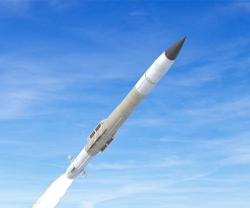
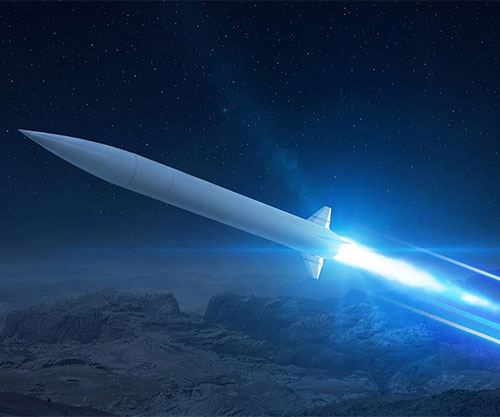





In a decisive move to guarantee American overmatch against any adversary, Lockheed Martin and the U.S. Department of War (DoW) announced a framework agreement to accelerate the production of Precision Strike Missiles (PrSM).
The agreement builds on a previous $4.94 billion contract award from the U.S. Army last year and together, these actions will quadruple PrSM production capacity.
Lockheed Martin is mobilizing the full might of its industrial and technological power to build the Arsenal of Freedom by dramatically accelerating production of this critical munition, leveraging next-generation technologies to build faster and better.
This initiative directly supports the national imperative to build a more lethal, resilient and ready fighting force, backed by a stronger, advanced industrial base. The agreement includes the ability to negotiate a multi-year contract up to seven years, should Congress grant multi-year authority, contingent upon future congressional authorization.
The agreement marks the latest commitment Lockheed Martin has made to expand and strengthen the Arsenal of Freedom, creating high-paying, highly skilled jobs that will secure peace through strength for generations to come.
On March 4, U.S. Central Command confirmed that long-range PrSM was used in combat for the first time during Operation Epic Fury, marking the system's operational debut and demonstrating expanded deep-strike capability.
Designed to succeed the legacy Army Tactical Missile System (ATACMS), PrSM delivers extended range, improved lethality and platform versatility. The system is enabled by mission integration and digital engineering across industry and government. In July 2025, the Army granted Milestone C approval for PrSM, signaling readiness for full production and deployment.
“Lockheed Martin delivers the advanced precision fires capabilities the warfighter needs, including the Precision Strike Missile (PrSM), which expands deep-strike capability,” said Lockheed Martin Chairman, President and CEO Jim Taiclet.
“We are working closely with the Department of War and the U.S. Army to scale production to meet operational demand and ensure the joint force has the capabilities needed to deter and defeat emerging threats,” he added.
Lockheed Martin has invested more than $7 billion since President Donald Trump's first term to expand capacity for priority systems, including approximately $2 billion dedicated to accelerating munitions production. These investments in facilities, tooling, suppliers and workforce are enabling higher production rates at speed and scale.
Lockheed Martin was the first in the industry to announce a framework agreement for munitions acceleration under the DoW’s Acquisition Transformation Strategy, tripling production capacity of the combat-proven PAC-3® Missile Segment Enhancement (MSE) interceptor and a second agreement to quadruple the production capacity of Terminal High Altitude Area Defense (THAAD) interceptors.
Lockheed Martin has more than 115,000 square feet of dedicated operations space in the United States for PrSM, with more than 400 U.S. employees supporting the program currently.
Meantime, BAE Systems also announced it has signed a landmark seven-year framework agreement with the U.S. Department of War (DoW) to quadruple production capacity and accelerate delivery of the infrared seeker for the Terminal High Altitude Area Defense (THAAD) interceptor missile in support of Lockheed Martin Corporation.
Under the agreement, BAE Systems will increase annual production of the seekers, delivering the speed and scale required to counter emerging threats and ensure mission readiness.
“This new, multi-year agreement provides a long-term demand signal that gives us the confidence to further invest in expanding our capacity; and underscores the strength of industry’s collaboration with the Department of War,” said Tom Arseneault, President and CEO of BAE Systems, Inc.
Guided by BAE Systems’ advanced sensor technology, THAAD interceptors engage ballistic missiles and can destroy warheads with kinetic force both inside and outside of the atmosphere.
BAE Systems’ work on the THAAD seeker takes place at the company’s state-of-the-art facilities in Nashua, New Hampshire, and Endicott, New York.